The Rise of Agentic AI: Beyond Chatbots to Autonomous Systems
The Rise of Agentic AI: Beyond Chatbots to Autonomous Systems
Agentic AI represents a fundamental shift from AI that responds to AI that acts. Here's what distinguishes it, where it's already working, and how to approach adoption responsibly.
The AI conversation has evolved. We've moved beyond asking "Can AI understand this query?" to "Can AI complete this task autonomously?" This shift—from reactive to agentic AI—is reshaping what's possible.
What Makes AI "Agentic"?
Agentic AI systems share key characteristics that distinguish them from traditional AI assistants:
Autonomous Goal Pursuit
Traditional AI: Responds to explicit requests Agentic AI: Works toward objectives with minimal guidance
An AI assistant summarizes a document when asked. An agentic system identifies which documents need attention, summarizes them, routes them to relevant people, and follows up on required actions.
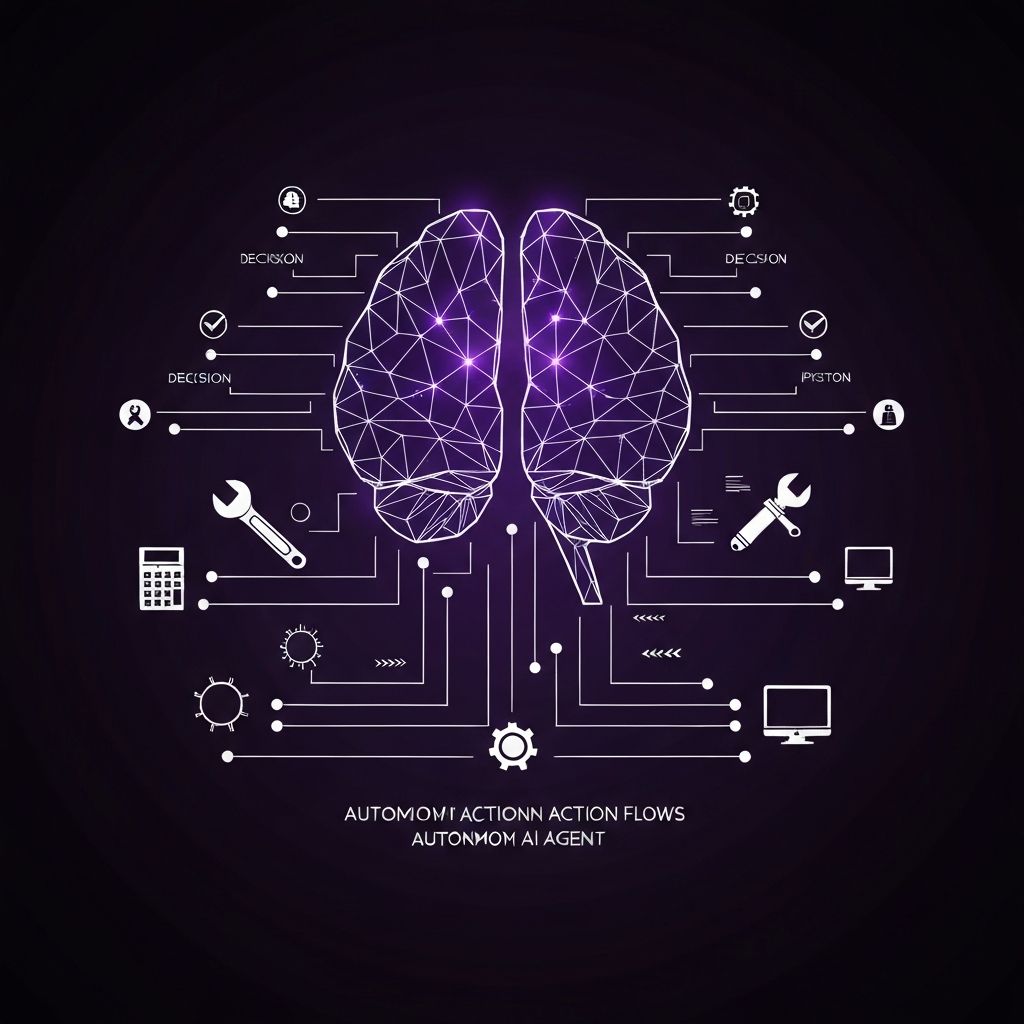
Tool Use and Environment Interaction
Agentic systems don't just process information—they take actions:
- Executing code
- Querying databases
- Calling APIs
- Interacting with external systems
They exist within an environment and modify it.
Planning and Reasoning
Complex tasks require breaking goals into subgoals, sequencing actions, and adapting when things don't go as expected.
Agentic systems reason about:
- What steps are needed
- What order to execute them
- How to handle failures
- When to ask for help
Memory and Context
Effective agents maintain context across interactions:
- What has been accomplished
- What's pending
- What's been tried and failed
- What information has been gathered
This persistent memory enables coherent long-running tasks.
Where Agentic AI Is Working Today
We're deploying agentic systems across several domains:
Automated Workflow Processing
Systems that:
- Monitor incoming requests (emails, tickets, forms)
- Classify and prioritize
- Gather required information from various sources
- Execute standard processes
- Escalate appropriately
Human involvement: Exception handling and final approvals.
Research and Analysis
Agents that:
- Accept research questions
- Identify relevant sources
- Extract and synthesize information
- Generate structured reports
- Iterate based on feedback
Human involvement: Direction setting and quality validation.
Software Development Assistance
Beyond code completion to:
- Understanding feature requirements
- Proposing implementation approaches
- Writing and testing code
- Identifying and fixing issues
- Documenting changes
Human involvement: Architectural decisions and code review.
The Trust and Safety Challenge
Agentic systems introduce risks that require careful management:
Unintended Actions
An agent optimizing for a goal might take actions you didn't anticipate. A cost-optimization agent might cancel services you actually need.
Mitigation: Action boundaries, approval gates, reversibility requirements.
Compounding Errors
When agents act autonomously over multiple steps, errors compound. A small misunderstanding in step 1 leads to completely wrong outputs by step 10.
Mitigation: Checkpoints, human-in-the-loop for critical decisions, robust error detection.
Security Surface
Agents that interact with external systems create security exposure. An agent with email access could be manipulated through prompt injection in incoming messages.
Mitigation: Strict capability boundaries, input sanitization, security monitoring.
Our Design Principles for Agentic Systems
Based on our deployment experience, we've developed principles that guide our agentic AI work:
1. Minimal Necessary Autonomy
Grant only the autonomy required for the task. An agent doesn't need database write access if it only needs to query data.
2. Transparent Reasoning
Agents should explain their reasoning. This enables oversight and debugging. If an agent can't explain why it took an action, that's a red flag.
3. Graceful Human Handoff
Design clear escalation paths. Agents should recognize their limitations and hand off cleanly to humans when appropriate.
4. Reversible Actions First
Prefer reversible actions. When irreversible actions are necessary, require explicit confirmation.
5. Continuous Monitoring
Monitor agent behavior in production. Look for:
- Unusual action patterns
- Increasing error rates
- Deviation from expected workflows
- User feedback signals
Getting Started with Agentic AI
If you're considering agentic AI, start here:
Identify Suitable Tasks
Good candidates:
- High-volume, repetitive processes
- Clear success criteria
- Tolerance for some errors
- Existing documentation of the process
Poor candidates:
- Novel, creative work
- High-stakes decisions with no reversibility
- Processes requiring significant judgment
- Tasks with poor documentation
Start with Human-in-the-Loop
Begin with agents that propose actions for human approval. This builds:
- Understanding of agent capabilities
- Trust in agent decision-making
- Training data for improvement
Reduce human involvement as confidence grows.
Invest in Observability
You can't manage what you can't measure. Build comprehensive logging and monitoring from day one.
The Road Ahead
Agentic AI is in early innings. The systems we're building today are impressive but limited. The next few years will bring:
- More sophisticated reasoning capabilities
- Better handling of long-running tasks
- Improved reliability and safety measures
- New interaction paradigms for human-agent collaboration
We're investing heavily in agentic capabilities because we believe this is where AI delivers transformative value—not just assisting human work, but autonomously accomplishing goals.
Ready to explore agentic AI for your organization? Contact us to discuss the possibilities.
Written by
Aespa Team